The Power of Data: The Game Film for Business Success

Kade Brewster • January 11, 2025

The Power of Data: The Game Film for Business Success

Data Consulting Services

As the college football playoff unfolds, fans are captivated by the precision, strategy, and execution that separate championship teams from the rest. Last night, I was watching Ohio State vs. Texas. Texas was in position to tie the game late in the fourth quarter. On 2nd & Goal from the 1, instead of running the ball downhill behind one of the best offensive lines in America, they decided to pitch the ball outside, and they lost 7 yards as a result. This was likely the nail in the coffin as two plays later a strip sack returned for a touchdown made it a two touchdown Ohio State lead with 2 minutes to play. Now, Texas coach Steve Sarkisian knows way more than I will ever know about football, so I really shouldn't be questioning the play call. However, it just felt like a strange call in that scenario given the strength of the Texas offensive line, and the elite speed of the Ohio State defense. 

Now, Ohio State will play Notre Dame for the national title (TV Executives Rejoice) and Texas is done for the year. However, with the benefit of hindsight, it certainly would have been beneficial in that moment for Sark to remember that Ohio State might have the fastest defensive roster in the country, and running outside against elite speed is often a recipe for disaster. 

Football season is my favorite time of year. My wife and I, both Oklahoma State University alumni, share a passion for the sport and attend games regularly with season tickets. Above you'll see me and my daughter at one of her first OSU games—a snapshot of our little family tradition. But what is my point, in this discussion about football? Why am I bringing up the Texas second down call from last night? 


Well, I'm glad you asked. It's because, like business, college football is very complex. Behind every play call there is usually a very specific game plan that has been derived from hours of meticulous game film analysis. Coaches and players obsess over game tapes, using them to refine their strategies, identify weaknesses, and exploit opportunities. 


What if I told you that in the world of business, data is the equivalent of game film for football??


For businesses, data provides insights into operations, competitors, and customers, much like game film illuminates the strengths and weaknesses of a football team. Let’s dive into this analogy, exploring how data can transform a business’s performance just as game film shapes the destiny of a football team vying for the championship.


Analyzing Your Team: Understanding Internal Strengths and Weaknesses


Football Insight: Coaches meticulously study practice film to evaluate their own players. They identify who hustles during every rep, who understands the playbook, and who is consistently out of position. Each player is graded to assess their strengths and weaknesses, influencing decisions on starting lineups and rotations.


Business Parallel: Businesses must evaluate their internal teams using performance data. Whether it’s salespeople, welders, service providers, or machinists, analyzing KPIs such as productivity, quality, and adherence to protocols helps identify top performers and areas for improvement.


Key Actions:


  • Track individual and team performance metrics.
  • Use KPIs to highlight strengths and gaps in execution.
  • Develop coaching plans for underperformers and reward high achievers.


By studying their own "practice film," businesses can make strategic decisions about promotions, training, and even resource allocation to ensure that the right people are in the right roles. If you want your business to win, you need to build the best roster that you possibly can. 


Scouting the Competition: Understanding Market Position


Football Insight: Opponent film reveals key players and tendencies. Coaches identify star performers—like an elite wide receiver or dominant defensive end—and plan their strategy accordingly. Whether it’s double-teaming a threat or adapting offensive schemes, understanding the opponent gives teams a competitive edge.


Business Parallel: Businesses can gain similar advantages by analyzing competitors’ data. Metrics like customer satisfaction scores, pricing structures, and sales trends offer insights into where competitors excel and where they fall short. This level of information allows you to strategically choose how you want to position yourself in the market. 


Key Actions:


  • Conduct competitive benchmarking to assess market position.
  • Identify gaps in your offerings and decide whether to invest in improvement or adjust pricing strategies.
  • Use customer feedback to understand where competitors are outperforming you.


Strategic decisions rooted in competitor analysis—just like game plans formed from film—help businesses stay ahead in the market.


Game Planning: Building a Data-Driven Strategy


Football Insight: Coaches build gameplans by combining insights from practice and opponent film. They create playbooks that maximize their team’s strengths and exploit their opponent’s vulnerabilities. Teams that execute these plans well often dominate those that rely on intuition alone. It's also important to note that each gameplan is built for a specific opponent. You don't recycle the same gameplan for every game, that's a losing strategy. 


Business Parallel: Data-driven businesses craft strategies based on insights from internal and external analysis. This involves:


  • Identifying key trends and opportunities.
  • Aligning resources to leverage strengths and address weaknesses.
  • Developing proactive responses to potential market shifts.
  • Building a unique winning strategy for each major competitor.


Key Actions:


  • Use dashboards and analytics tools to monitor real-time performance.
  • Implement predictive analytics to anticipate customer needs and market trends.
  • Align operational goals with the data insights to ensure execution matches strategy.
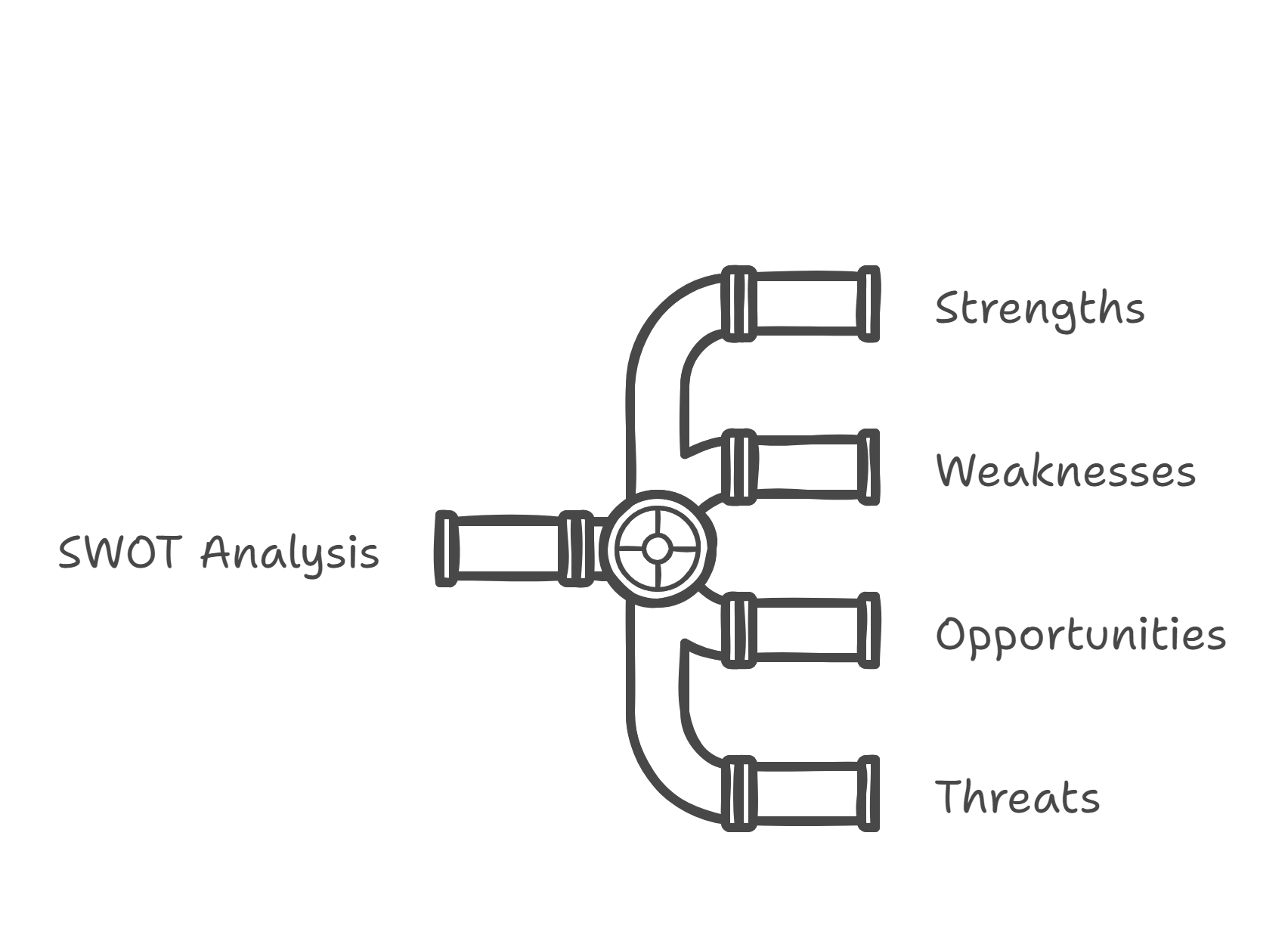
  • Identify top competitors, conduct SWOT analysis for each, and build a plan on how you compete and win against each one. 


A well-prepared business strategy, just like a game plan, wins by design rather than by chance.
SWOT

In-Game Adjustments: Responding in Real Time


Football Insight: Game situations are fluid, and successful coaches adapt in real time. They make halftime adjustments based on how opponents respond to their strategy, using live film feeds and player feedback to pivot. You often see players looking at tablets on the sideline, that's because they need immediate feedback mechanisms to adjust and perform in real-time.


Business Parallel: Businesses, too, must remain agile. Market conditions change, competitors launch new products, and customer preferences evolve. Real-time data enables businesses to adapt their strategies and operations on the fly. It's also important to give employees real-time feedback. Don't make them wait for monthly 1-1s or annual performance reviews.


Key Actions:

  • Monitor data streams to identify deviations from expected performance.
  • Use tools like CRM systems to adjust sales strategies in response to customer behavior.
  • Iterate quickly on marketing campaigns or product offerings based on performance metrics.
  • Give immediate feedback.


Being able to pivot quickly ensures businesses stay competitive, just as in-game adjustments keep football teams in contention.


Post-Game Review: Learning from Outcomes


Football Insight: After every game, teams review the film to evaluate their performance. What went well? What broke down? This reflection informs future practice and game plans, ensuring continuous improvement. You must win or learn. Even better, learn when you win as well.


Business Parallel: Post-mortem analyses of projects, campaigns, or quarterly performance serve the same purpose in business. They allow teams to reflect, learn, and improve.


Key Actions:

  • Conduct performance reviews using historical data.
  • Identify what strategies worked and where missteps occurred.
  • Use these insights to refine future operations and avoid repeating mistakes.


Teams that embrace a culture of learning and reflection—whether in football or business—position themselves for long-term success.

Analytics

Winning Through Data-Driven Insights


Just as game film is essential for a football team preparing for the college playoff, data is indispensable for businesses seeking to compete and thrive in today’s market. Coaches who watch game film to understand their opponents, refine their strategies, and prepare their players outperform those who don’t. Similarly, businesses that leverage data to analyze internal performance, scout competitors, and adapt strategies dominate their industries.


The key is a commitment to the process. Just as great football teams are built on relentless preparation and execution, successful businesses must embrace a data-driven culture. By doing so, they can turn insights into action, consistently outperforming their competition and achieving championship-level results. When teams are evenly matched, the team with the best gameplan usually wins. The same is true for business. If you're playing to win, you better watch film.


Brewster Consulting Logo

At Brewster Consulting Group, we recognize that managing data can be a daunting task for small and mid-sized enterprises. Allow us to assist you in harnessing the potential of operational intelligence! Reach out to one of our specialists today to refine your data strategy, optimize your processes, and establish solid governance. Ready to cultivate data analysis and propel scalable growth? Your journey begins right here!


Book a meeting
By Ranae Peterson October 29, 2025
In the fast-paced world of marketing, agility is everything. But for many small marketing firms , staying organized and executing effectively can feel like an uphill battle. Between juggling client deliverables, managing creative teams, and keeping up with digital trends, it’s easy for even the most talented agencies to lose focus or momentum. That’s where fractional project management comes in - a cost-effective, flexible way for small agencies to gain project management expertise without the overhead of a full-time hire. What Is Fractional Project Management? Fractional project management allows marketing firms to hire an experienced project manager or project management team on a part-time, contract, or as-needed basis. These professionals provide the strategic direction, structure, and accountability of a full-time role, but with the flexibility and affordability that small firms need. Unlike traditional project management roles, fractional project managers adapt to your workflow. They can: Create or refine marketing project management frameworks. Oversee campaign timelines, deliverables, and communication. Manage resources, budgets, and vendor relationships. Introduce project management tools, such as Asana. Provide performance insights to keep campaigns aligned with business goals. The Common Challenges Small Marketing Firms Face: Running a small marketing firm means constantly balancing creativity, client satisfaction, and growth, all while working with limited time, budgets, and staff. While many small agencies deliver incredible results for their clients, their internal operations are often suboptimal. Without proper structure and project management in place, business operations can quickly become reactive instead of proactive. Here are some of the most common challenges small marketing firms face, many of which can be alleviated with the right fractional project management support: 1. Inconsistent Execution of Marketing Strategies Small firms often start projects with enthusiasm but struggle to maintain consistency across campaigns, clients, and platforms. Without a clear project roadmap or centralized process, teams can lose sight of timelines, priorities, or deliverables. This inconsistency can lead to missed deadlines, off-brand messaging, and a loss of client confidence over time. 2. Limited Budgets and Tight Margins Many boutique agencies operate on razor-thin margins, meaning that hiring a full-time senior project manager or operations manager may simply be out of reach. This leads to a “DIY” approach to project coordination, where creative directors, account managers, or even designers end up juggling scheduling and task tracking in addition to their core roles. It’s a recipe for burnout and inefficiency. 3. Attracting and Retaining Talent In the marketing world, top talent wants growth, clarity, and collaboration. When internal processes feel chaotic or constantly changing, employees can become frustrated or disengaged. A lack of structured project management can contribute to high turnover, especially among younger professionals looking for organized environments where they can learn and thrive. 4. Keeping Up with Industry Trends and Technology Marketing trends shift faster than ever, from SEO and social media algorithms to automation and analytics tools. Small firms, often focused on servicing clients, rarely have time to step back and strategically assess which technologies to adopt or how to integrate them effectively into their workflows. This can result in wasted subscriptions, underutilized tools, or outdated methods that slow productivity. 5. Balancing Growth and Quality As marketing firms grow, the complexity of managing multiple campaigns, channels, and clients multiplies. Without scalable project management processes, expansion can lead to growing pains: stretched teams, missed opportunities, and declining quality of work. Fractional project management can help maintain creative excellence while effectively scaling operations. 6. Cash Flow and Resource Allocation Project delays, scope creep, and unclear task ownership often lead to billing inaccuracies and wasted time. Many small agencies underestimate how much untracked work cuts into profit margins. Without proper project visibility or a defined workflow, forecasting becomes guesswork, making it harder to predict cash flow or plan for sustainable growth. 7. Client Communication and Expectation Management Misaligned expectations between the firm and its clients are another major pain point. When communication is informal or scattered across emails and chat threads, misunderstandings arise. A structured project management system creates transparency, accountability, and shared visibility, all key to stronger client relationships. 8. Content Creation Bottlenecks Small firms often pride themselves on creativity, but without workflow organization, content can get stuck in feedback loops. Campaign approvals, revisions, and scheduling can all become bottlenecks that stall production. Over time, this can limit the firm’s ability to scale output or deliver consistently across multiple accounts. 9. Lack of Technology Utilization Even when agencies have invested in tools like Asana, ClickUp, or Monday.com, they often fail to leverage them effectively. Either no one owns the system or team members don’t have time to update it. The result is a fragmented picture of project progress and duplicated effort, both of which fractional project managers specialize in resolving. 10. Burnout and Overwork With so many moving pieces, it’s no surprise that burnout is common among small marketing teams. When deadlines stack up and roles blur, people spend more time reacting to problems than delivering creative solutions. Over time, that stress impacts morale, retention, and ultimately, client results. In short: most small marketing firms aren’t lacking talent, they’re lacking structure. And without a scalable framework for managing people, projects, and priorities, even the most brilliant ideas can get lost in the shuffle. How Fractional Project Management Helps Small Marketing Firms Fractional project management offers both strategic and operational advantages for small agencies, including: Strategic Oversight Without the Cost: Fractional PMs bring senior-level strategy to the table without requiring a full-time salary. They guide teams on where to prioritize resources, how to align goals, and how to scale efficiently. Flexibility and Scalability: Whether your firm manages two clients or twenty, fractional project management services scale with you. You can engage in support during busy periods or for specific initiatives without long-term commitments. Immediate Access to Top Talent: Fractional project managers are seasoned professionals who’ve worked with multiple marketing firms, giving your team instant access to best practices and proven systems. Improved Accountability and Execution: With an external PM keeping projects on track, your creative team can focus on what they do best: creating and delivering exceptional marketing work. Enhanced Profitability and Efficiency: From budget management to workflow optimization, a fractional project manager helps uncover bottlenecks that waste time and money, improving cash flow and project margins. When Should a Small Marketing Firm Consider Fractional Project Management You might not need full-time help yet, but here are a few signs it’s time to bring in a fractional project manager : -You’re juggling too many high-value projects at once. -Projects are constantly behind schedule or over budget. -Your team is overworked, burned out, or missing deadlines. -You lack internal project management expertise. -You feel stuck or overwhelmed trying to manage growth. If these sound familiar, fractional project management might be the missing piece. The Bottom Line For small marketing firms, fractional project management isn’t just about organization; it’s about unlocking growth. With the right systems in place, marketing agencies can scale confidently, deliver better results, and focus on what they do best: creativity and strategy. As the marketing landscape evolves, fractional project management services offer a competitive edge, one that combines flexibility, structure, and cost efficiency.
By Ranae Peterson October 9, 2025
Many small businesses are laser-focused on growth, sales, and staying afloat. In that constant hustle, one of the most valuable assets, data , often gets overlooked. Even when businesses “look at the numbers,” that doesn’t always mean they’re collecting the right data, tracking the right KPIs, or translating those insights into actionable strategies. Fractional analytics bridges that gap. It allows small businesses to access experienced data analysts or analytics teams on a part-time or project basis, essentially bringing enterprise-level data expertise without the full-time cost. Think of it as analytics-as-a-service for small business owners who need clarity and insight but can’t justify a full analytics department. The Reality: Why Data Gets Overlooked While most business leaders know data is “important,” it can be hard to see its impact until it’s visualized through dashboards, real-time reporting, or guided by a professional who knows how to turn information into action. Without these tools and expertise, business decisions often rely on gut instinct instead of insight, leading to inefficiencies, missed opportunities, and in some cases, failure. Statistics show that: About 20% of small businesses don’t survive their first year. Nearly 50% fail within five years. Around 65% close within ten years. While the reasons vary, from financial mismanagement to poor planning, many of these challenges stem from a lack of data visibility or poor data management . In other words, the root cause often isn’t just financial; it’s analytical . Real World Analogy Imagine running a restaurant without ever checking what inventory levels, most frequent orders, or best margin products. You might think you’re doing well because the restaurant is busy, but when you do the books, you’re not actually making any money. Now, imagine having a fractional analytics consultant helping you organize and visualize your data. They don’t need to be in the kitchen every day, but when they are, they bring order to chaos, tracking inventory and margin by menu item, predicting staffing needs, and saving costs by cutting waste. That’s what fractional analytics does for your business data. It helps you understand what’s really happening across operations, finance, and customer service so you can make smarter, faster decisions. Common Operational Challenges Solved by Fractional Analytics Here are a few common pain points small businesses face that fractional analytics services can address: Inefficient reporting and manual data entry. Lack of clear KPIs or performance tracking. Inconsistent financial forecasting. Missed revenue opportunities due to incomplete data. Poor inventory or resource management. Lack of clarity around customer behavior and profitability. Benefits of Fractional Analytics for Small Businesses Engaging a fractional analytics provider offers far more than just numbers and dashboards. It’s about empowering smarter decisions without breaking the bank. Cost efficiency: Avoid the high salary and benefits of full-time analytics hire. Speed to impact: Gain immediate access to expertise, no lengthy onboarding or training required. Scalability: Bring in analytics support when you need it and scale it up as you grow. Better decision-making: Replace guesswork with data-driven insights and actionable KPIs. Time savings: Spend less time in spreadsheets and more time growing your business. Long-term cost reduction: Identify duplicate payments, missed invoices, and inefficiencies that quietly drain profit. Fractional analytics also enhances cash flow management and enables business leaders to spot opportunities for optimization, often resulting in measurable growth and sustainability. Why It’s a Make-or-Break Decision Choosing whether to work with a fractional analytics consultant could be the difference between surviving and thriving. Many business owners don’t realize that outsourced analytics is even an option, one that offers flexibility, affordability, and strategic insight without high overhead. The truth is, small business leaders don’t have to do it all alone, nor do they need to rush into hiring a full-time team. Fractional analytics gives them the best of both worlds: the expertise of a senior data strategist and the flexibility of a part-time engagement. Final Thoughts In today’s competitive market, data-driven decision making isn’t optional; it’s essential. Small businesses that embrace fractional analytics gain clarity, confidence, and control over their operations. By investing in the right insights today, they set up the foundation for sustainable growth tomorrow. If your business is ready to move from guessing to growing, now’s the time to explore what fractional analytics services can do for you.
Project Management Office Implementation
By Ranae Peterson September 3, 2025
This is a blog post detailing a case study where Brewster Consulting Group helped Allcare Health build a Project Management Office.
Process Optimization for Rental Cars
By Ranae Peterson September 3, 2025
This case study covers process improvement consulting for a rental car company.
Process Optimization for Healthcare
By Ranae Peterson September 3, 2025
This case study covers process optimization and improvement for a healthcare company
Consumer Goods Analytics
By Ranae Peterson September 3, 2025
This case study covers developing Power BI dashboards and power bi reports for a consumer goods company.
Health and Safety Power BI Dashboard
By Ranae Peterson September 3, 2025
This case study covers creating a Health and Safety dashboard in Power BI for DP World.
Power BI Financial Dashboard
By Ranae Peterson September 3, 2025
This case study covers building a financial dashboard in Power BI for Medefy
Power BI Dashboard Development
By Ranae Peterson September 3, 2025
This case study covers building an operational dashboard in Power BI for Tulsa International Airport
HR Power BI Dashboard
By Ranae Peterson September 3, 2025
This case study covers building HR Power BI dashboards for DP World.