By Ranae Peterson
•
May 18, 2026
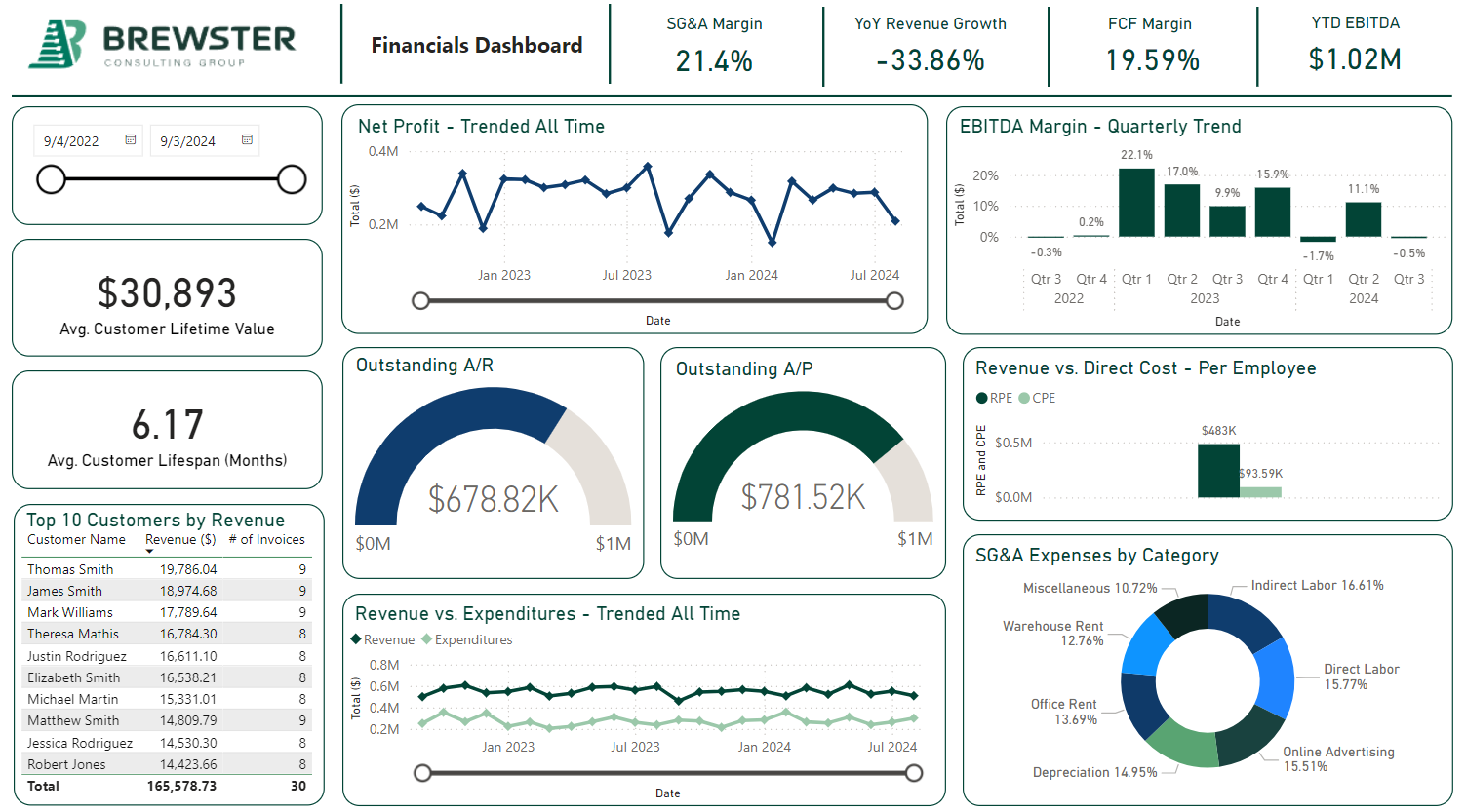
For decades, key performance indicators (KPIs) have been the backbone of organizational leadership. They have guided boardroom discussions, shaped strategic planning cycles, and provided executives with a sense of control over increasingly complex businesses. Monthly reports, quarterly reviews, and annual targets created a rhythm, one that allowed leaders to evaluate performance, adjust direction, and maintain alignment across the enterprise. And for a long time, that system worked. It worked because the pace of business allowed it to. Markets moved slower. Customer behavior evolved gradually. Competitive shifts were visible, but rarely immediate. In that environment, looking backward to make forward decisions was not just acceptable; it was effective. But that environment no longer exists. Today, many organizations are still operating with KPI frameworks designed for a world that has already moved on. The issue is not that these metrics are incorrect or poorly designed. In fact, most organizations have spent years refining them, aligning them to strategy, and embedding them deeply into performance management systems. The issue is timing. Executives are making decisions based on signals that are already outdated by the time they are reviewed. Key performance indicators have long been the cornerstone of business management. They have provided structure, accountability, and alignment across organizations of all sizes. They have helped translate strategy into measurable outcomes and ensured that leadership teams remained focused on what mattered most. And for decades, they worked exactly as intended. But what worked in a slower, more predictable environment is now creating blind spots in a real-time, data-driven one. The Evolution of KPIs – and Where They Fall Short Today The concept of KPIs emerged prominently in the late 20th century as organizations sought better ways to measure performance in increasingly competitive markets. Thought leaders such as John F. Rockart at MIT Sloan emphasized the importance of identifying critical success factors and equipping executives with a focused set of metrics to guide decision-making. Over time, this evolved through contributions from researchers like D. Otley, who reinforced the need to align KPIs with strategic priorities, and frameworks such as the Balanced Scorecard, which expanded measurement beyond financial outcomes to include customer, operational, and growth perspectives. These developments were transformative. They enabled organizations to connect high-level strategy to day-to-day operations and to ensure that performance was monitored consistently across all levels of the business. The introduction of business intelligence tools marked the next major shift. Dashboards, automated reporting, and improved data accessibility allowed organizations to track KPIs more efficiently and with greater visibility. However, even with these advancements, the fundamental question remained the same. What happened? This is where the limitation becomes clear. Traditional KPIs, even when supported by modern BI tools, are inherently retrospective. They describe past performance, occasionally explain it, but rarely influence outcomes in the moment. The Shift to Real-Time Signals The rise of advanced analytics and artificial intelligence has fundamentally changed what is possible. Organizations are no longer limited to describing or diagnosing performance. They can now predict future outcomes and, more importantly, prescribe actions in real time. This shift introduces a new paradigm: real-time KPI signals . Real-time insights are often misunderstood as simply faster dashboards or more frequent reporting updates. In reality, they represent something far more significant. They are continuously updated performance signals enhanced by AI, that not only reflect the current state of the business but also anticipate where it is heading and recommend what should be done next. In this model, KPIs are no longer passive indicators. They become active drivers of decision-making. Instead of reviewing performance at the end of a reporting cycle, organizations can respond to emerging risks, capitalize on opportunities as they arise, and adjust operations dynamically. The traditional “wait and see” approach is replaced by a continuous feedback loop in which data informs action in near real time. A Market Divided: Leaders vs. Laggards Despite the clear advantages of this shift, adoption remains uneven. A significant portion of organizations are still in the early stages of integrating AI into their operations. According to McKinsey’s State of AI: Global Survey 2025, nearly two-thirds of organizations remain in the experimentation phase, while only about one-third have successfully embedded AI into their day-to-day operations. This gap is not just a matter of technological maturity; it is quickly becoming a defining factor in competitive performance. Organizations that have moved beyond experimentation are not simply improving incrementally. They are operating on fundamentally different timelines. They are identifying trends earlier, making decisions faster, and adjusting strategies with a level of precision that static KPI frameworks cannot match. Meanwhile, organizations that remain reliant on traditional metrics are effectively managing their businesses in hindsight. Why Organizations Struggle to Transition The hesitation to adopt real-time, AI-driven insights is understandable. For many executives, the shift introduces legitimate concerns around control, trust, and organizational disruption. Legacy systems often create barriers to integration. Data silos limit visibility and consistency. There are concerns about data quality, governance, and security. Additionally, the talent required to design, implement, and maintain these systems is not always readily available. However, these challenges, while real, are not the primary issue. The deeper problem is that many organizations attempt to introduce AI into existing operating models without fundamentally rethinking how decisions are made. They treat AI as an enhancement to reporting rather than as a catalyst for redesigning workflows, governance structures, and performance management systems. As a result, AI initiatives often remain isolated experiments rather than enterprise-wide transformations. This helps explain why so many organizations remain stuck in the early stages of adoption. Factors such as limited budgets, lack of infrastructure readiness, narrow use-case focus, and insufficient strategic vision all contribute to this stagnation. In some cases, pressure from executive leadership to “do something with AI” leads to fragmented efforts that fail to deliver meaningful returns, reinforcing skepticism rather than building momentum. Redefining Performance in the Age of AI For organizations that successfully make the transition, the impact goes far beyond improved reporting. AI-driven KPI systems do not just enhance performance measurement; they redefine it. Research highlighted in The Future of Strategic Measurement: Enhancing KPIs with AI shows that organizations leveraging AI to create and manage KPIs are significantly more effective across multiple dimensions. These organizations are more than three times better at predicting future performance, over three times more likely to realize financial benefits, and more than twice as efficient as their peers. Additionally, they are four times more likely to experience increased collaboration across teams. These outcomes are not simply the result of better data. They reflect a fundamental shift in how performance is understood and managed. In a real-time environment, performance is no longer something that is tracked after the fact. It is continuously shaped and optimized. Metrics evolve from static benchmarks into dynamic predictors. Decision-making shifts from being primarily judgment-based to being informed, and in some cases guided by algorithms. KPI management becomes less about monitoring and more about governance, dialogue, and action. What This Means for Executive Leadership For senior leaders, this shift presents both an opportunity and a challenge. On one hand, real-time insights provide an unprecedented level of visibility and control. Executives can more beyond reactive decision-making and begin to operate proactively, with a clearer understanding of risks and opportunities as they emerge. On the other hand, this level of transparency requires a different approach to leadership. It demands a willingness to trust data-driven systems, to embrace new ways of working, and to rethink traditional governance models. Perhaps most importantly, it requires leaders to accept that speed has become a strategic advantage. In an environment where competitors can respond to changes in real time, delays in decision-making, no matter how well-informed, can have significant consequences. The Cost of Standing Still It is important to acknowledge that transitioning to a real-time, AI-driven KPI environment is not without its challenges. Implementation costs can be significant. Integration efforts can be complex. Organizations must address data quality issues, invest in training, and establish robust governance frameworks to manage risk. However, these challenges are temporary. The risk of inaction is not. Organizations that fail to evolve their KPI frameworks will continue to operate with delayed visibility, increased uncertainty, and slower response times. Over time, this will not just impact efficiency; it will erode competitiveness. Moving Forward: A Strategic Imperative The path forward does not begin with technology. It begins with intent. Organizations must first recognize that real-time insights are not a luxury or a future-state aspiration; they are rapidly becoming a requirement for effective management. From there, the focus should shift to building the necessary foundations, including data readiness, governance structures, and a clear strategic roadmap for AI integration. This is not about replacing KPIs. It is about reimagining them. Final Thought Static KPIs were designed for a world where time was on your side. That is no longer the case. In today’s environment, the most significant risk is not choosing the wrong metrics. It is relying on the right metrics too late. And for organizations competing in the age of AI, that delay may be the difference between leading the market and struggling to keep up. The shift toward real-time, AI-driven performance is no longer theoretical; it’s operational. The question is how and when organizations choose to act. If this is an area your business is ready to explore more seriously, Brewster Consulting Group can help you navigate these shifts with clarity and structure. Reach out today, we’d be happy to connect .